
An unbiased PhIP-Seq screen of 10 patients surfaces the first specific serological biomarker for a rare, treatable myopathy.
JAMA Neurology · 2022;79(8):808–816 · DOI: 10.1001/jamaneurol.2022.1357
Dubey D, Beecher G, Hammami MB, et al. Identification of Caveolae-Associated Protein 4 Autoantibodies as a Biomarker of Immune-Mediated Rippling Muscle Disease in Adults. JAMA Neurol. 2022;79(8):808-816. doi:10.1001/jamaneurol.2022.1357
Dubey, D., Beecher, G., Hammami, M. B., Knight, A. M., Liewluck, T., Triplett, J., et al. (2022). Identification of caveolae-associated protein 4 autoantibodies as a biomarker of immune-mediated rippling muscle disease in adults. JAMA Neurology, 79(8), 808-816. https://doi.org/10.1001/jamaneurol.2022.1357
@article{dubey2022cavin4,
  author  = {Dubey, Divyanshu and Beecher, Grayson and Hammami, M. Bakri and Knight, Andrew M. and Liewluck, Teerin and Triplett, James and others},
  title   = {Identification of Caveolae-Associated Protein 4 Autoantibodies as a Biomarker of Immune-Mediated Rippling Muscle Disease in Adults},
  journal = {JAMA Neurology},
  volume  = {79},
  number  = {8},
  pages   = {808--816},
  year    = {2022},
  doi     = {10.1001/jamaneurol.2022.1357}
}
Phage immunoprecipitation sequencing (PhIP-Seq) identified IgG autoantibodies against caveolae-associated protein 4 (cavin-4) in 8 of 10 adults with immune-mediated rippling muscle disease (iRMD), while sera from 123 healthy individuals and 118 disease controls (including myasthenia gravis, immune-mediated myopathies, and autoimmune CNS disease) were uniformly seronegative. This is the first specific serological biomarker described for iRMD — a rare, treatable myopathy that has historically been a diagnosis of exclusion.
In this publication:
Rippling muscle disease is a rare condition where muscles produce visible wave-like contractions when tapped or stretched. The condition has two forms — one inherited (caused by mutations in the CAV3 or CAVIN1 genes) and one acquired in adulthood, called immune-mediated rippling muscle disease (iRMD). The acquired form responds to immune-suppressing treatment, suggesting the immune system is attacking muscle, but until this study no specific autoantibody had ever been identified to confirm the diagnosis or track the disease.
The Mayo Clinic group (Dubey and colleagues) used phage immunoprecipitation sequencing — an unbiased method that displays the entire human proteome on bacteriophage particles and then captures whatever the patient’s antibodies bind — to screen sera from 10 patients with iRMD. In 8 of those 10 patients, the antibodies bound a single protein: caveolae-associated protein 4, also called cavin-4. The same antibody was absent in 123 healthy controls and in 118 patients with other neuromuscular or autoimmune diseases, including myasthenia gravis. Muscle biopsies from antibody-positive patients showed depletion of cavin-4 in 55–91% of muscle fibers, mirroring the patchy loss of caveolin-3 already known to characterize iRMD on histology.
The finding gives clinicians a blood test to support a diagnosis that previously required muscle biopsy plus exclusion of inherited mutations, and it implicates cavin-4 itself in the disease mechanism. Cavin-4 IgG converts adult-onset iRMD from a label applied after ruling out CAV3/CAVIN1 mutations into an antibody-defined nosological entity — the same kind of rewrite that aquaporin-4 IgG produced for neuromyelitis optica and MuSK IgG produced for seronegative myasthenia gravis — letting clinicians separate inherited rippling muscle disease (which will not respond to immunotherapy) from iRMD (which often does) without committing the patient to muscle biopsy plus a multi-gene caveolinopathy panel as the only diagnostic path.
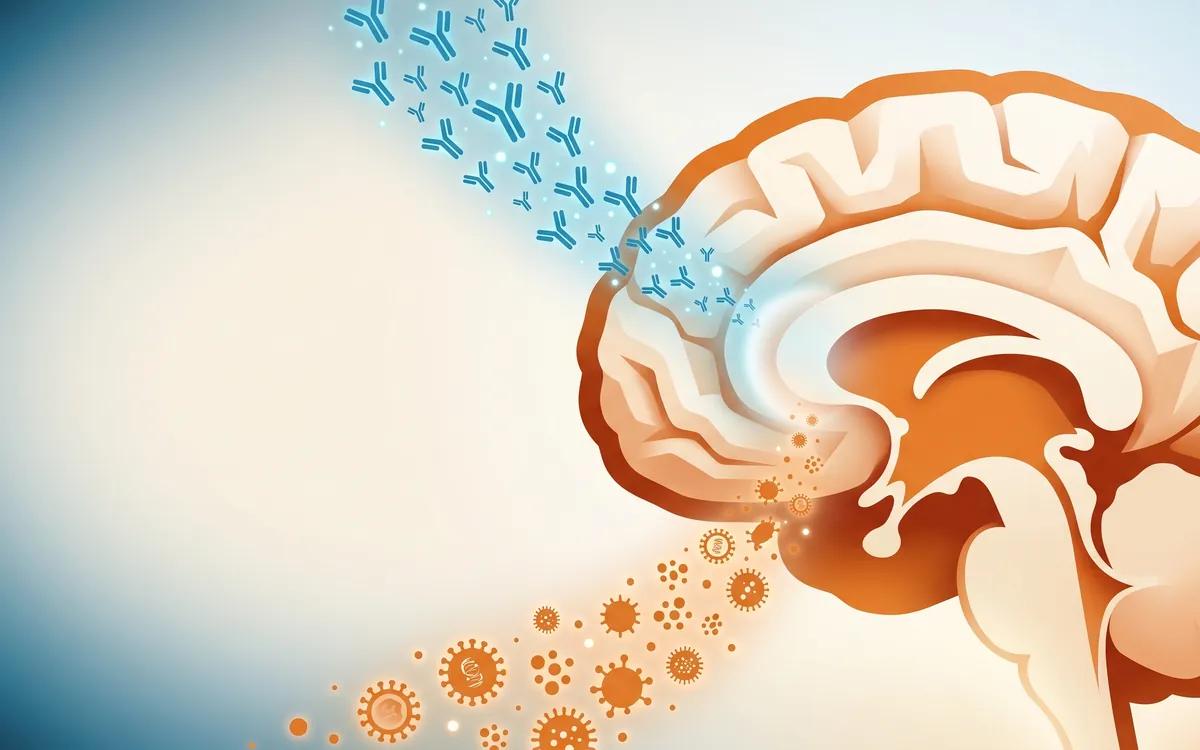
HuSIGHT + EnviroSIGHT for Parkinson's research: environmental triggers and autoimmune contributions in one assay.
Read more
Proteome-wide assessment of therapeutic candidate antibodies: comprehensive profiling of on- and off-target binding with…
Read more
A single unbiased screen against the human proteome recovers the established SLE autoantibody suite and surfaces novel c…
Read more
The molecular record of every infection, exposure, and immune response the body has generated over a lifetime.
Read more
A single unbiased screen across 368,000+ human protein and peptide targets recovers known SLE autoantigens and detects n…
Read more
Where the antibody reactome fits in the multi-omic stack, how MIPSA deciphers it, and what the HuSIGHT, VirSIGHT, and En…
Read more
Anti-Sp4 autoantibodies modify cancer risk in TIF1γ-positive dermatomyositis patients.
Read moreCredle et al., Nature Comm 2022: the foundational MIPSA paper introducing antibody reactome profiling.
Read moreAuto-antibody reactivities against ubiquitously expressed antigens identified in viral myocarditis cohort.
Read moreBjornevik et al., Science 2022: 10M serial serum samples link EBV to multiple sclerosis.
Read moreMapping anti-citrullinated protein antibody specificities in rheumatoid arthritis at single-epitope resolution.
Read moreTGM4: an immunogenic, prostate-restricted antigen and research target for prostate cancer.
Read more