
AID-driven somatic hypermutation in germinal-center B cells — not antigen design or titer differences — gates the female advantage in cross-protective vaccine breadth.
mBio · August 30, 2022 · DOI: 10.1128/mbio.01839-22
Ursin RL, Dhakal S, Liu H, et al. Greater breadth of vaccine-induced immunity in females than males is mediated by increased antibody diversity in germinal center B cells. mBio. 2022;13(4):e01839-22. doi:10.1128/mbio.01839-22
Ursin, R. L., Dhakal, S., Liu, H., Jayaraman, S., Park, H. S., Powell, H. R., Sherer, M. L., Littlefield, K. E., Fink, A. L., Ma, Z., Mueller, A. L., Chen, A. P., Seddu, K., Woldetsadik, Y. A., Gearhart, P. J., Larman, H. B., Maul, R. W., Pekosz, A., & Klein, S. L. (2022). Greater breadth of vaccine-induced immunity in females than males is mediated by increased antibody diversity in germinal center B cells. mBio, 13(4), e01839-22. https://doi.org/10.1128/mbio.01839-22
@article{Ursin2022VaccineSexDiff,
  author  = {Ursin, Rebecca L. and Dhakal, Santosh and Liu, Han and Jayaraman, Sahana and Park, Han-Sol and Powell, Harrison R. and Sherer, Morgan L. and Littlefield, Kirsten E. and Fink, Ashley L. and Ma, Zexu and Mueller, Alice L. and Chen, Andrew P. and Seddu, Kumba and Woldetsadik, Yishak A. and Gearhart, Patricia J. and Larman, H. Benjamin and Maul, Robert W. and Pekosz, Andrew and Klein, Sabra L.},
  title   = {Greater Breadth of Vaccine-Induced Immunity in Females than Males Is Mediated by Increased Antibody Diversity in Germinal Center B Cells},
  journal = {mBio},
  volume  = {13},
  number  = {4},
  pages   = {e01839-22},
  year    = {2022},
  doi     = {10.1128/mbio.01839-22}
}
A study from Sabra Klein's group at Johns Hopkins, with serological epitope mapping by H. Benjamin Larman's lab, shows that female mice vaccinated against an H1N1 influenza A strain mount a broader, more cross-protective antibody response than males. The mechanism is not the antigen, the dose, or the neutralizing titer — it is germinal-center quality. Females build larger germinal centers with more class-switched IgG2c, higher levels of activation-induced cytidine deaminase (AID), and greater somatic hypermutation per VHJH rearrangement. Genetic deletion of Aicda erased the female advantage in protection against drift virus.
In this publication:
Vaccinated female mice produced higher cross-reactive total IgG and IgG2c titers against every mutant virus and recognized a greater number of unique linear hemagglutinin epitopes than males. When virus drift was modest (one or two mutations), females also had lower lung viral titers and less weight loss after live-virus challenge — even though traditional neutralizing-antibody titers against the mutants were equally low in both sexes.
The mechanistic source: females built larger germinal centers in the spleen, with more class-switched B cells expressing higher levels of Aicda mRNA. B-cell receptor sequencing showed females accumulated more somatic hypermutations per VHJH rearrangement than males. Genetically deleting Aicda erased the female advantage in protection against the 2-mutation drift virus, identifying AID-driven antibody diversification as the proximal mechanism for sex-biased vaccine breadth.
The female advantage in cross-protective antibody response is mediated by AID-driven somatic hypermutation in germinal-center B cells, not by antigen-design choices or simple titer differences — meaning breadth is gated by germinal-center quality, not just by what antigen is delivered. Strategies that boost AID activity, prolong germinal-center reactions, or raise somatic hypermutation rates in male recipients become a tractable path to closing the sex gap in cross-protection against drift variants — a goal central to universal influenza, SARS-CoV-2, and pan-coronavirus programs. For vaccine developers and clinical immunologists, sex-balanced trial design is no longer optional — male and female subjects mount mechanistically different antibody responses to the same dose, and pooling sexes can mask both protective signals and breadth deficits.

A peer-reviewed methodology white paper for VirSIGHT, Infinity Bio's unbiased antibody reactome assay covering 500+ huma…
Read more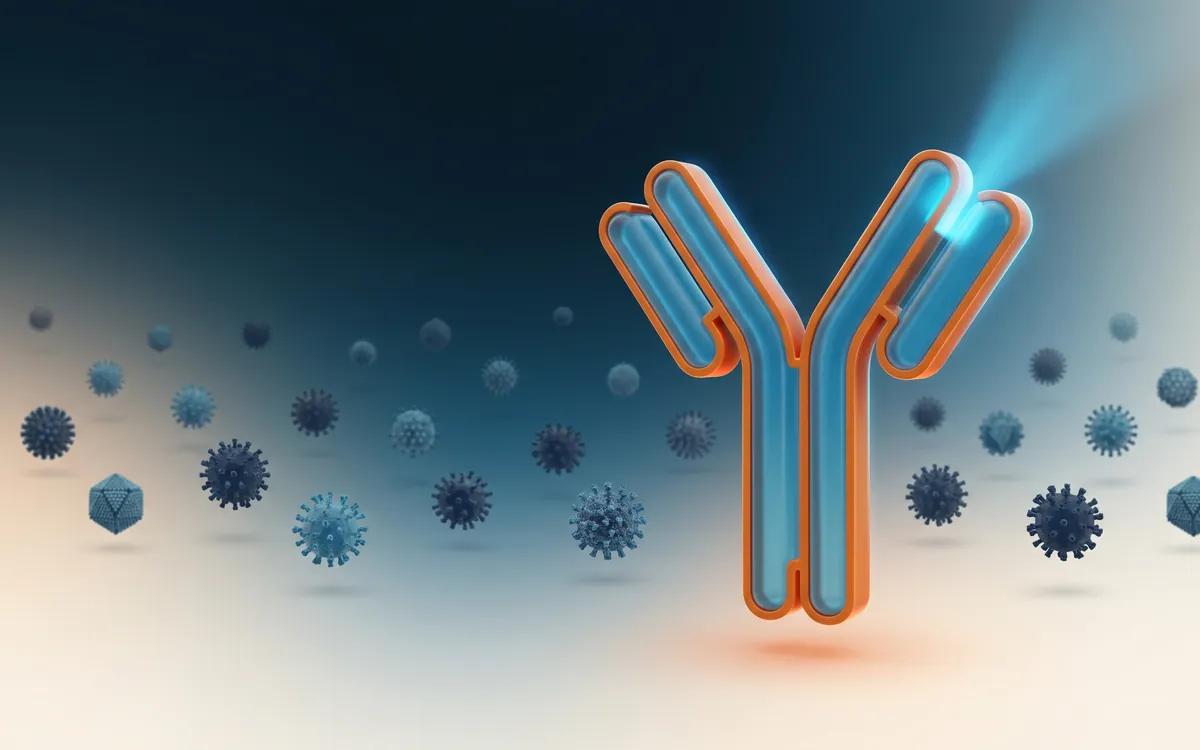
VirSIGHT at a glance: antibody reactome profiling across the known human virome (500+ species).
Read more
The molecular record of every infection, exposure, and immune response the body has generated over a lifetime.
Read more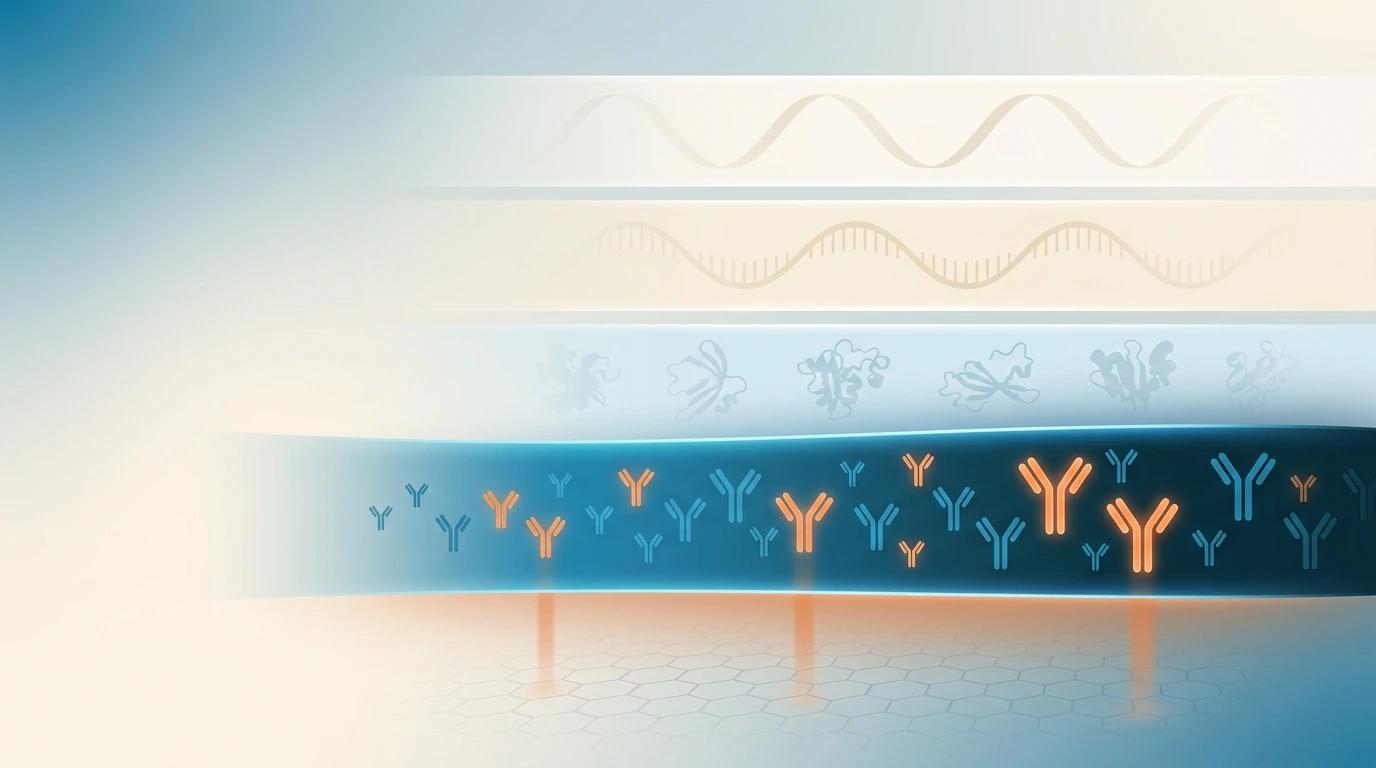
Where the antibody reactome fits in the multi-omic stack, how MIPSA deciphers it, and what the HuSIGHT, VirSIGHT, and En…
Read more
Lindahl et al., 2026: viral immunity in IgG products and global immunity debt.
Read moreSchistosoma mansoni vaccine candidates identified via unbiased screening in self-cured macaques.
Read moreAntibody reactome profiling of bat reservoirs identifies emerging zoonotic potential for biosurveillance.
Read moreFrontiers Immunol 2023: pre-infection antibody reactome predicts post-infection HIV viral control.
Read moreAntibody reactome profiling of the human anellome: small DNA viruses persisting in healthy hosts.
Read moreBjornevik et al., Science 2022: 10M serial serum samples link EBV to multiple sclerosis.
Read moreAntibody epitope selection is partially heritable, shown across twin and SNP-genotyped cohorts.
Read moreBioinformatic deconvolution of cross-reactive signals in virome-wide antibody reactome data.
Read more