
A proteome-wide phage-display screen against macaque self-cure sera nominates antibody-guided vaccine candidates for a parasite that infects 200 million people.
npj Vaccines · 2024;9(1):5 · DOI: 10.1038/s41541-023-00803-x
Woellner-Santos D, Tahira AC, Malvezzi JVM, et al. Schistosoma mansoni vaccine candidates identified by unbiased phage display screening in self-cured rhesus macaques. npj Vaccines. 2024;9(1):5. doi:10.1038/s41541-023-00803-x
Woellner-Santos, D., Tahira, A. C., Malvezzi, J. V. M., Mesel, V., Morales-Vicente, D. A., Trentini, M. M., Marques-Neto, L. M., Matos, I. A., Kanno, A. I., Pereira, A. S. A., Teixeira, A. A. R., Giordano, R. J., Leite, L. C. C., Pereira, C. A. B., DeMarco, R., & Verjovski-Almeida, S. (2024). Schistosoma mansoni vaccine candidates identified by unbiased phage display screening in self-cured rhesus macaques. npj Vaccines, 9(1), 5. https://doi.org/10.1038/s41541-023-00803-x
@article{WoellnerSantos2024Schistosoma,
  author  = {Woellner-Santos, Daisy and Tahira, Ana C. and Malvezzi, Jo\~ao V. M. and Mesel, Vinicius and Morales-Vicente, David A. and Trentini, Monalisa M. and Marques-Neto, L\'azaro M. and Matos, Isaac A. and Kanno, Alex I. and Pereira, Adriana S. A. and Teixeira, Andr\'e A. R. and Giordano, Ricardo J. and Leite, Luciana C. C. and Pereira, Carlos A. B. and DeMarco, Ricardo and Verjovski-Almeida, Sergio},
  title   = {Schistosoma mansoni vaccine candidates identified by unbiased phage display screening in self-cured rhesus macaques},
  journal = {npj Vaccines},
  year    = {2024},
  volume  = {9},
  number  = {1},
  pages   = {5},
  doi     = {10.1038/s41541-023-00803-x}
}
A phage-display proteome library covering 99.6% of Schistosoma mansoni proteins was screened against IgG from 10 rhesus macaques during self-cure and challenge-resistant infection phases, surfacing parasite gut and esophageal-gland proteins (SmCatB, SmAE, MEG-3.1, MEG-4.1, MEG-8.1, MEG-15) as protective vaccine antigens. Mice immunized with a pool of 36 phage-displayed peptides drawn from these targets showed a significant reduction in adult worm burden after cercarial challenge, providing the first proteome-wide, antibody-guided vaccine-candidate set for a parasite that still infects more than 200 million people worldwide.
In this publication:
Schistosomiasis is a neglected tropical disease that infects roughly 200 million people across 78 countries and causes substantial morbidity in low- and middle-income regions. Today the only widely used treatment is praziquantel, a single drug whose efficacy is now threatened by resistance and uneven access — making a prophylactic vaccine the highest-leverage long-term control tool. The barrier has been biological: Schistosoma mansoni is a multi-stage, multicellular parasite, and decades of one-protein-at-a-time vaccine work have surfaced only a handful of candidates (Sm-p80, Sm-TSP-2, Sm14) — none yet licensed.
This study takes a fundamentally different approach. Rather than guessing which parasite proteins might be protective, the authors built a synthetic DNA phage-display library that encodes 99.6% of all 119,747 overlapping 58-amino-acid peptides from the entire S. mansoni proteome. They then used PhIP-Seq (phage-display immunoprecipitation followed by sequencing) to read the IgG repertoires of 10 rhesus macaques across the rare “self-cure and challenge-resistant” infection phenotype, in which primates spontaneously clear the parasite and resist re-infection.
The screen revealed a temporally structured antibody response: during the early establishment phase (weeks 4–6 post-infection), antibodies preferentially recognized epitopes from extracellular gut and esophageal-gland proteins (SmCatB cathepsin-B paralogs, SmAE asparaginyl endopeptidase, and MEG micro-exon-gene products); during the late clearance phase (week 10 onwards), the response shifted toward intracellular antigens. To convert the discovery into a functional vaccine test, the team selected 36 of the most-enriched peptides, expressed them as phage-fusion proteins, and immunized mice with the pool. Vaccinated mice showed a statistically significant reduction in adult worm burden compared with phage-only controls after challenge with 120 cercariae — direct in-vivo validation that antibody-reactome-discovered antigens can confer protection.
Why reactome profiling captures biology that other immune assays miss.
Read more
Ben Larman at AIRRC7: the science behind MIPSA library construction.
Read more
Why reactome profiling captures biology that other immune assays miss.
Read more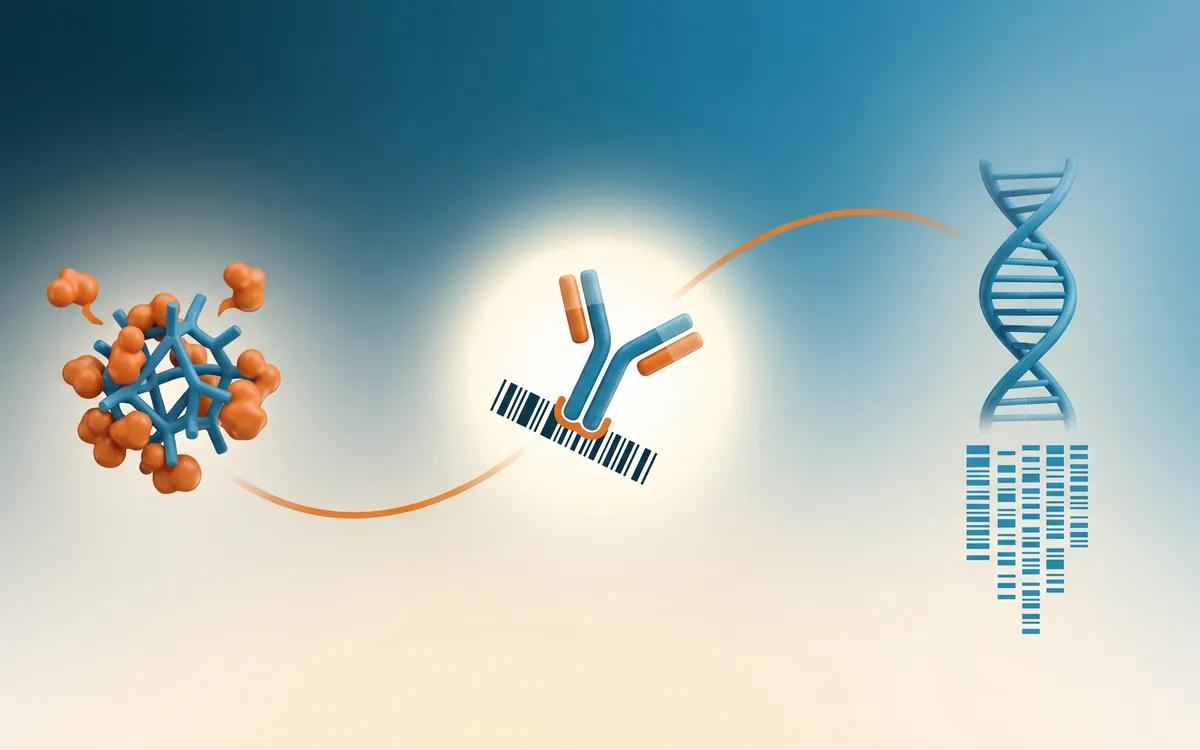
How MIPSA deciphers the antibody reactome: the three-step workflow at a glance.
Read more
Antibody Reactomics: the new dimension for precision immunology research.
Read more
Proteome-wide assessment of therapeutic candidate antibodies: comprehensive profiling of on- and off-target binding with…
Read more
A Southern soul ballad about the exposures written into a body’s antibodies, and the EnviroSIGHT panel built to survey t…
Read more
A single unbiased screen against the human proteome recovers the established SLE autoantibody suite and surfaces novel c…
Read more
The molecular record of every infection, exposure, and immune response the body has generated over a lifetime.
Read more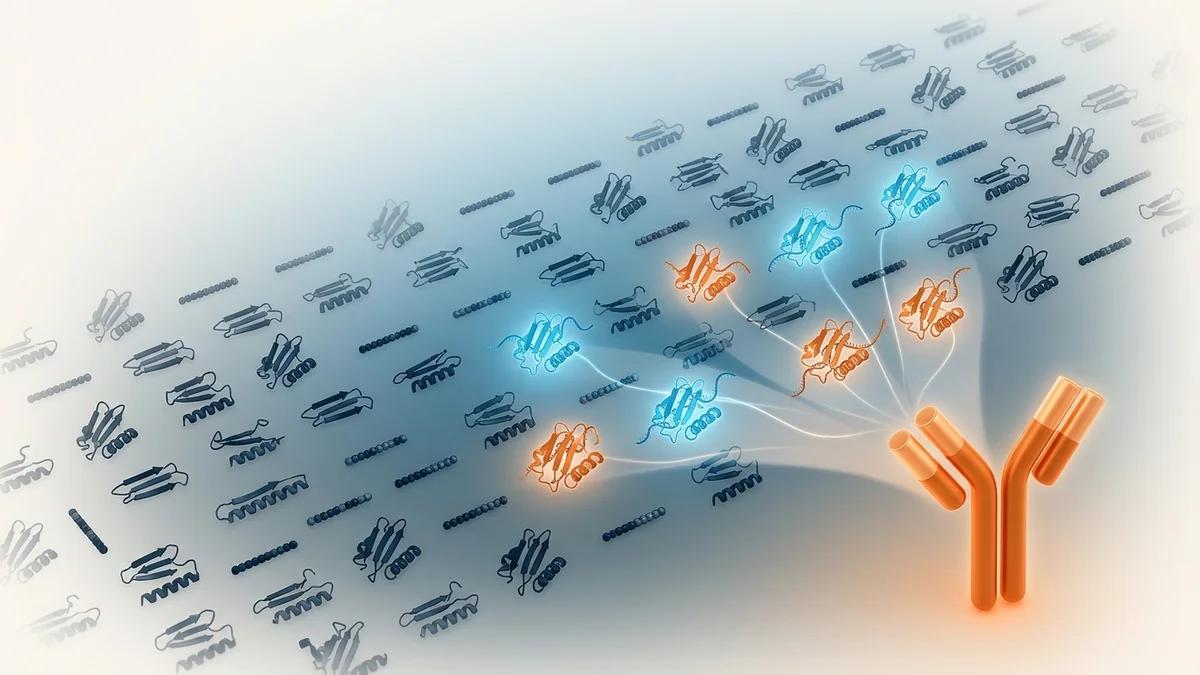
A single unbiased screen across 368,000+ human protein and peptide targets recovers known SLE autoantigens and detects n…
Read more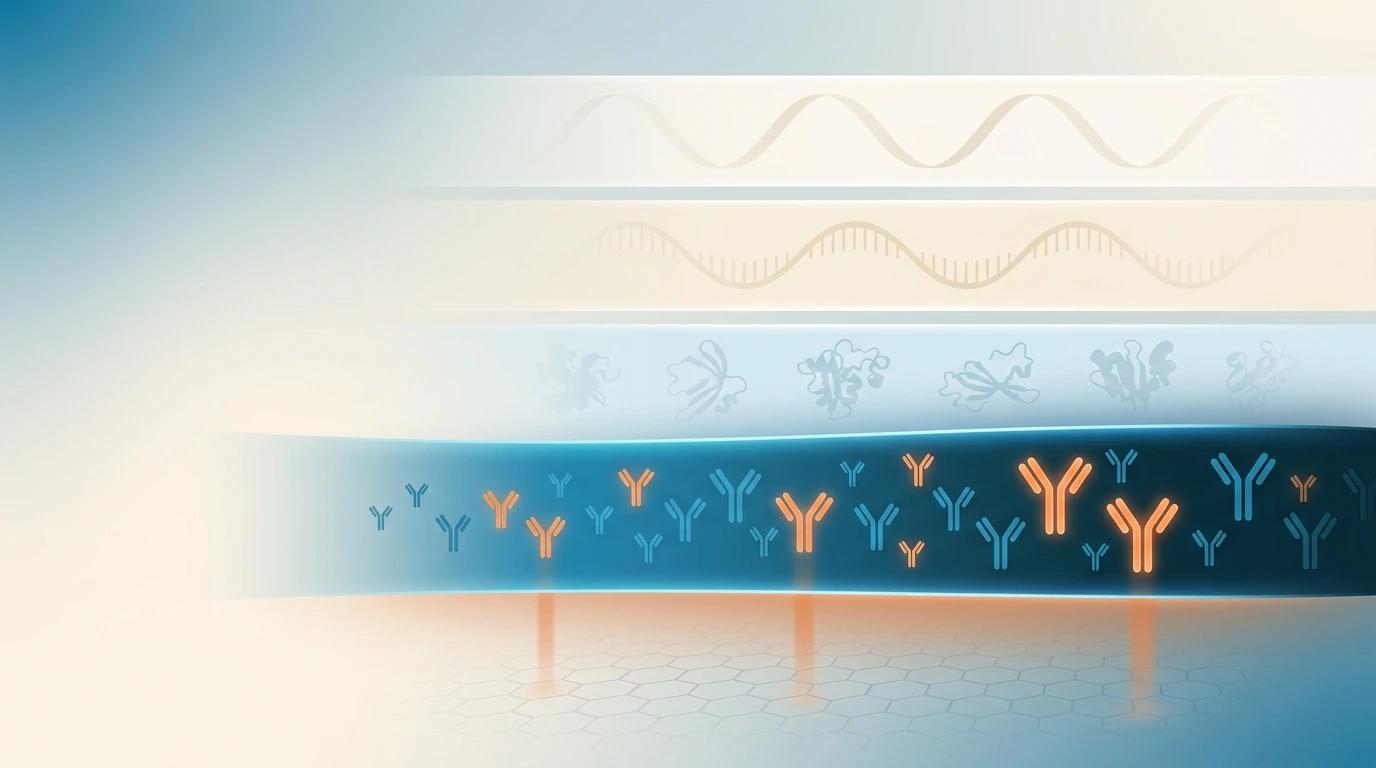
Where the antibody reactome fits in the multi-omic stack, how MIPSA deciphers it, and what the HuSIGHT, VirSIGHT, and En…
Read more
Ben Larman on translating dense reactome data: Antibody Reactomics framework, Complex Data Delivery.
Read more