
What becomes visible when you measure the full set of reactivities a person's circulating antibodies recognize, rather than one panel at a time.
Two principal investigators show what becomes visible when you measure the full set of reactivities a person’s circulating antibodies recognize. In a Mass General Brigham biobank discovery cohort (~1,290 samples) plus a ~300-sample replication cohort, herpesvirus exposures map to specific autoantibody networks — and those autoantibodies, in turn, predict prevalent and incident chronic disease, including a sex-stratified protective signal in women. In a clinical thymoma-associated myasthenia gravis cohort, reactome profiling surfaces autoreactivities that extend well beyond the canonical acetylcholine receptor. The webinar opens with a brief MIPSA platform overview from Infinity Bio so the data make sense in context, and closes with a live Q&A on AChR detection limits, sequence-homology handling across related herpesviruses, and protective autoantibody signals.
In this video:
Katy Shaw-Saliba (Infinity Bio): Hello everyone and welcome to this webinar that’s being hosted by Labroots and sponsored by Infinity Bio. I’m Katy Shaw-Saliba and I’m the VP of Scientific Development here at Infinity Bio. It’s my distinct honor and pleasure to be joined by Dr. Linda Kusner, who is a professor at George Washington University, and Dr. Jessica Lasky-Su, who is an associate professor at Brigham and Women’s Hospital and Harvard Medical School. Today we’ll be talking about how measuring the reactivities of the circulating antibodies through reactome profiling can provide novel insights into human health. Before I turn it over to our speakers, I’ll present a little bit about Infinity Bio and our novel technology. We’ll open up for Q&A at the end — please don’t be shy in sharing your questions as we go.
Infinity Bio is the antibody reactome profiling company. Our scientific co-founders are Dr. Ben Larman from Johns Hopkins University and Dr. Steve Elledge from Harvard University, both of whom are giants in the antibody reactome technology space. Our laboratory is located in Baltimore, Maryland, where we operate as a fee-for-service business. We have 9,000 square feet with dedicated laboratory staff and we are able to process approximately 2,500 samples per week. Of note, during our Series A closing we acquired another antibody reactome profiling technology produced by a company formerly known as Seromyx, and we’ve expanded our scientific group with this closing.
So what is antibody reactome profiling, and what is the antibody reactome? The antibody reactome consists of all of the possible binding interactions between antibodies and antigens. The antibodies present in a person are a ledger of prior and ongoing immune responses, storing information against both foreign and self antigens. We believe this is a powerful opportunity for novel discoveries in health and disease, and a source of therapeutic molecules and diagnostic analytes.
Our novel MIPSA technology — Molecular Indexing of Proteins by Self-Assembly — was developed in Ben Larman’s lab at Johns Hopkins by our R&D director Joel Credle. It generates very large panels of DNA-barcoded full-length protein antigens and rationally designed peptide antigens. Each antigen is covalently linked through a HaloTag to its own unique DNA barcode, so we can determine which antigens an antibody in a specimen interacts with by sequencing the DNA barcodes. The workflow: mix the antibody source provided by the customer with our library in a 96-well plate, allow the antibody–antigen interactions to form, capture them by standard immunoprecipitation, and sequence the DNA barcodes. We always compare against a mock IP that contains no antibody source, and our bioinformatics team translates barcode counts into the antigens that antibodies in the sample reacted with.
We have four main catalog antigen libraries with non-overlapping barcodes, which means they can be mixed in a single reaction. VirSIGHT covers all known viruses that infect humans. Our newest library, EnviroSIGHT, is the world’s largest panel of non-viral microbial antigens — pathogenic bacteria, fungi, parasites, and a large component of the microbiome — plus allergens from arthropod vectors, food, plants and environmental sources. Together VirSIGHT and EnviroSIGHT cover the external exposome. HuSIGHT covers the self exposome — all human proteins as a mix of full-length proteins and overlapping peptides. The fourth library, MuSIGHT, is the mouse complement to HuSIGHT for animal model work. From our Series A acquisition we also added what was formerly the Seromyx platform, which we now call ExSIGHT — bacterial display of random peptides, allowing us to explore both the dark matter and the fine resolution of the antibody reactome and cast the widest net.
Applications span discovery and translational work: novel target discovery, disease etiology, mechanism of action, therapeutic target identification, disease stratification and drug response. With that, I’ll turn it over to our speakers. Jessica, please go ahead.
Jessica Lasky-Su (Brigham and Women’s / Harvard Medical School): Thank you. It’s wonderful to be here. I’m really excited to talk about some of the initial work I’ve been able to do on the Infinity Bio platform. This came out of an interest in understanding how autoantibodies and viral reactivities interact with disease — and in particular, how viral exposures relate to autoantibody activities and downstream health outcomes.
Autoantibodies arise when the immune system mistakenly recognizes self-proteins as foreign — through genetic predisposition (notably the HLA region), environmental triggers, or stochastic events. Until recently we couldn’t comprehensively profile autoantibodies and understand how they relate to disease at scale. The classic example linking viral exposure to autoimmunity is EBV and multiple sclerosis: molecular mimicry between viral antigens and host proteins precipitating cross-reactivity. Our question was broader: across many herpesviruses and many diseases, what does the relationship between herpes exposures and autoantibodies look like, and is there a common axis we can read?
We went to the Mass General Brigham Biobank, which has hundreds of thousands of biological samples linked to over 30 years of electronic medical records. We selected a discovery cohort of about 1,290 people and a replication cohort of about 300, and used Infinity Bio to profile viral and autoantibody reactivities with VirSIGHT and HuSIGHT — specifically all herpes viral peptides plus roughly 4,600 full-length human proteins.
The first thing we looked at was the distribution of reactivities. EBV showed a large number of highly prevalent peptides; varicella reactivities were also widespread, likely reflecting widespread vaccination and infection. Human (self) reactivities were much rarer — the majority were present in less than 15% of individuals. We then looked at the association between viral peptide reactivity and autoantibody reactivity. The Manhattan plot showed a striking number of autoantibodies above a 10−6 genome-wide significance threshold. Some of the most compelling pairs reached p-values below 10−80 — specific autoantibodies very tightly linked to specific herpesvirus peptides. A substantial fraction of these associations replicated in the independent validation cohort.
Next we asked whether autoantibodies and viral peptides could predict prevalent and incident disease in the biobank. With machine-learning models we found many autoantibodies that predicted specific disease endpoints with 70–90% accuracy, and 37 reached above 90% accuracy in held-out test sets. When we overlaid viral peptide–disease associations with autoantibody–disease associations, the autoantibodies replicated nearly 60% of the CMV-related viral peptide associations, which supports a shared mechanistic axis — viral exposure influencing autoantibody profile influencing disease, rather than two independent risk layers.
We visualized the relationships as tripartite networks: viral peptide nodes, disease nodes, and autoantibody nodes. Diseases that were associated with both an autoantibody and a viral peptide stood out as red hubs. Autoantibodies like PHLDA and PPA2 acted both as autoantibody–virus links and as broad disease hubs. Across the top 20 viral-peptide–disease associations we saw odds ratios above 10, with cancers, autoimmune diseases and neurodegenerative diseases recurring as hallmark categories.
Finally, when we stratified by sex and looked at biological aging clocks, we identified a cluster of autoantibodies in women that was strongly associated with reduced biological aging — and the same autoantibodies showed protective associations across multiple disease endpoints. Most autoantibody volcano plots are right-skewed (more positively associated with disease than negatively), but a clear protective subset exists, particularly in women, and we think it’s an under-explored area.
Katy Shaw-Saliba: Thank you so much, Dr. Lasky-Su. We’re collecting questions and will answer them at the end. Now we’ll have Dr. Kusner present her study.
Linda Kusner (George Washington University): Thank you. I want to talk about thymoma-associated myasthenia gravis and the occurrence of autoantibodies. Myasthenia gravis is a rare autoimmune disorder of the neuromuscular junction, classically driven by autoantibodies against the acetylcholine receptor. A subset of patients also have a thymoma — an epithelial tumor of the thymus — and these thymoma-associated cases have a distinct clinical course.
Working with the Indiana University thymoma biobank for 60% of our cases, and our internal George Washington University biobank for age- and sex-matched controls, we used the Infinity Bio platform to profile autoreactivity in thymoma-associated myasthenia gravis. Across the entire cohort, close to 5,000 proteins were autoreactive with over 6,000 reactive peptides. Patients ranged from 26 to 415 reactive proteins, while controls ranged from 47 to 623. Two controls showed unusually high reactivity but neither the peptides nor the proteins showed clear case–control differences for those individuals. Thymoma-associated MG patients had a higher level of unique autoantibodies than controls — including reactivities to TRIM46 and the P2X4 receptor, alongside the canonical interferon-alpha autoantibodies seen in roughly 23 of the 20-something thymoma samples we examined. TRIM46 is upregulated in cancers and there is literature on autoantibody expression in paraneoplastic central nervous system disorders. P2X4 is a purinergic receptor expressed in multiple immune cells and known to be involved in inflammation and immunity, although there is no prior literature on autoreactive antibodies to P2X4. We’re collaborating with Dr. Kai Kisand at the University of Tartu (interferon-alpha) and Dr. Steven Maner (P2X4) to develop ELISA-based confirmation of these findings.
Katy Shaw-Saliba: Wonderful — thank you so much to both of our speakers. Those were excellent presentations and I learned a tremendous amount. We do have a number of questions in the Q&A chat.
(Live Q&A — selected exchanges)
Q (for Dr. Lasky-Su): For the tripartite analyses, were you able to identify associations for cancers that have herpesviruses known as the etiological factor?
Lasky-Su: Yes — for EBV we see non-Hodgkin lymphoma and leukemia very strongly, plus bladder, lung, uterine, colon, liver, breast and prostate cancers. Almost all of them associate with EBV peptide reactivities at substantial effect sizes.
Q (for Dr. Kusner): Why were AChR antibodies not identified in the reactome assay?
Kusner: The acetylcholine receptor is a large multipass membrane complex that’s very difficult to assay outside of a radioimmunoassay (currently done at Mayo Clinic). Large multipass membrane proteins are a known limitation of any antibody reactome profiling technology — the HuSIGHT panel does include full-length proteins, so a conformational epitope can be picked up, but this particular protein’s topology makes it especially hard.
Q (for Dr. Lasky-Su): Were autoantibody and viral-peptide–disease associations always in the positive direction, or did you see any protective antibodies?
Lasky-Su: We absolutely see different autoantibodies that are protective. Most volcano plots are right-skewed but there is a clear protective subset, particularly in women, where one cluster is associated with reduced biological aging across multiple aging clocks and is protective across several disease endpoints.
Q (general): How does the platform deal with sequence homology between related herpesviruses when assigning autoantibody signal?
Shaw-Saliba: We use multiple sequence alignments to preserve diversity and we can analyze at both the protein and peptide level. Whether you focus on conserved regions (e.g. SARS-CoV-2 nucleocapsid) or variable regions (e.g. spike) depends on the question. Cross-reactivity is always a consideration with any serological method, and a lot of resolution depends on the annotation within the library.
Katy Shaw-Saliba: If there are no other burning questions — we’re happy to follow up directly on volume, cost, validation and study design. The recording will be posted on our website along with our previous webinar on the MIPSA platform. Thank you to Dr. Kusner and Dr. Lasky-Su, thanks to Labroots for hosting, and on behalf of our entire Infinity Bio team — thank you everyone.
Transcript auto-captioned by YouTube and lightly edited for clarity, speaker labels and accuracy of proper names. Statistical thresholds (e.g. p < 10−6, p < 10−80), cohort counts (~1,290 discovery / ~300 replication; ~5,000 autoreactive proteins / 6,000+ peptides; 26–415 patient and 47–623 control protein ranges) and accuracy figures (70–90%, 37 above 90%) are reproduced as stated by the speakers during the webinar. Collaborator names (Dr. Kai Kisand, University of Tartu; Dr. Steven Maner) are best-effort transliterations from auto-captioning and may differ in any forthcoming peer-reviewed publication.
Why reactome profiling captures biology that other immune assays miss.
Read more
Ben Larman at AIRRC7: the science behind MIPSA library construction.
Read more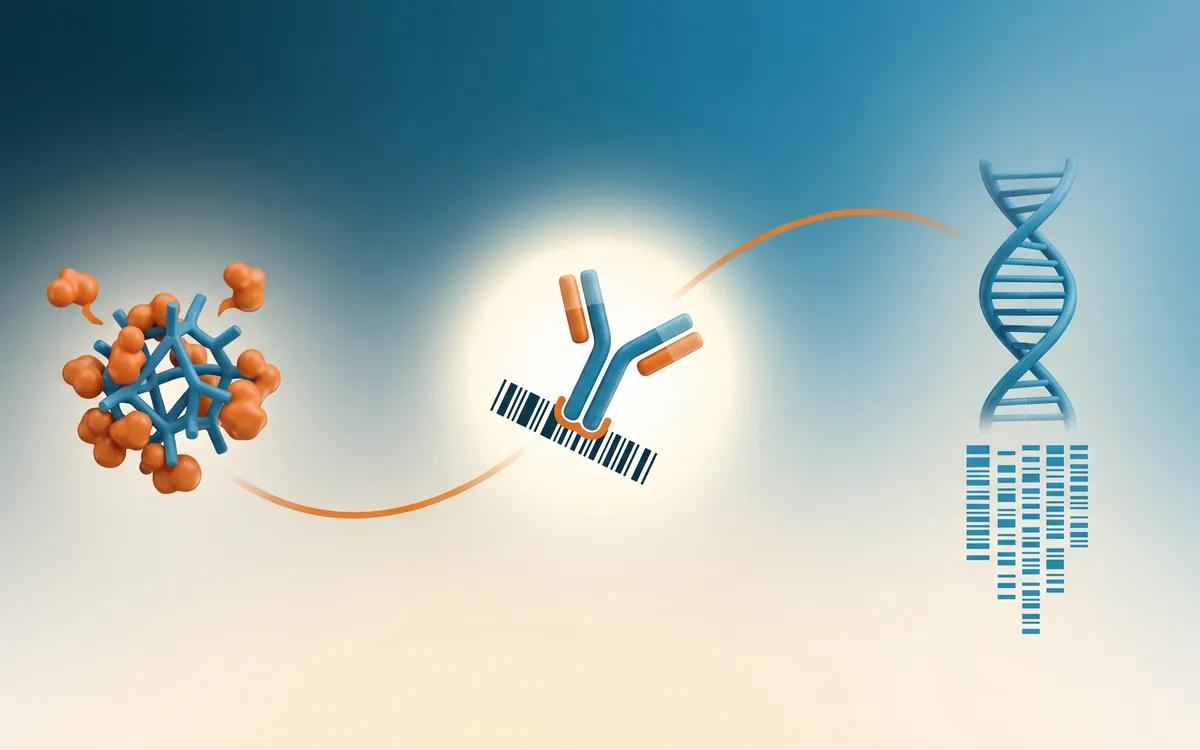
How MIPSA deciphers the antibody reactome: the three-step workflow at a glance.
Read more
Antibody Reactomics: the new dimension for precision immunology research.
Read more
Proteome-wide assessment of therapeutic candidate antibodies: comprehensive profiling of on- and off-target binding with…
Read more
A Southern soul ballad about the exposures written into a body’s antibodies, and the EnviroSIGHT panel built to survey t…
Read more
A single unbiased screen against the human proteome recovers the established SLE autoantibody suite and surfaces novel c…
Read more
The molecular record of every infection, exposure, and immune response the body has generated over a lifetime.
Read more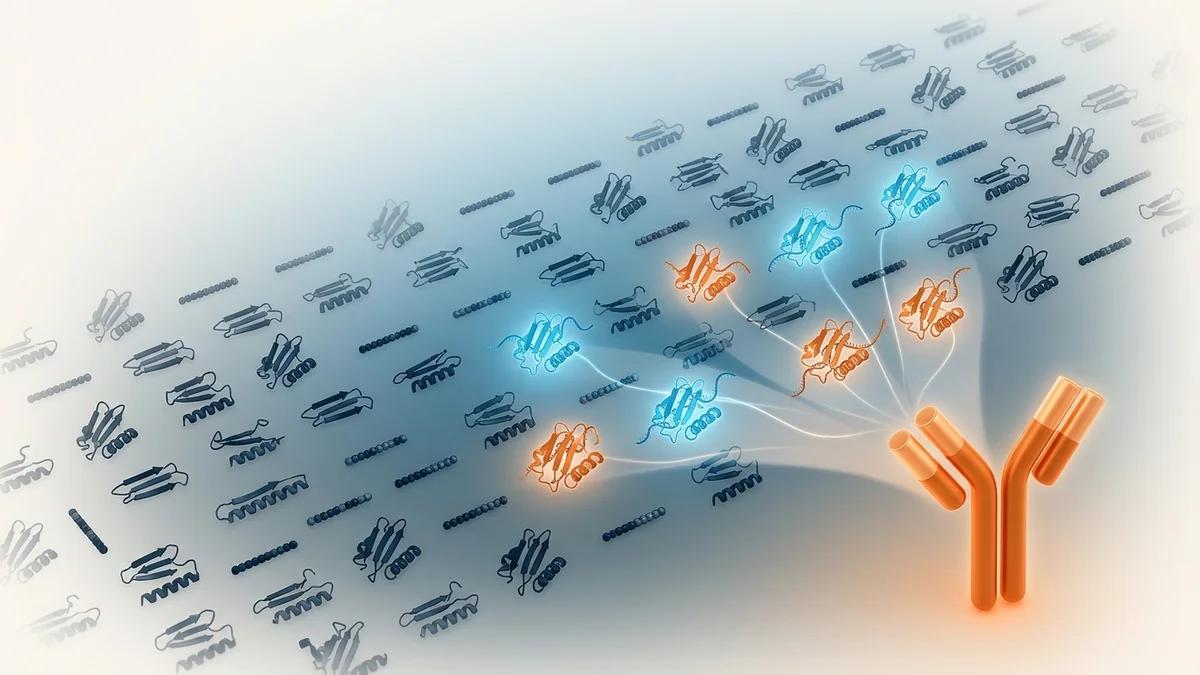
A single unbiased screen across 368,000+ human protein and peptide targets recovers known SLE autoantigens and detects n…
Read more
Where the antibody reactome fits in the multi-omic stack, how MIPSA deciphers it, and what the HuSIGHT, VirSIGHT, and En…
Read more
Ben Larman on translating dense reactome data: Antibody Reactomics framework, Complex Data Delivery.
Read more
Dolphyn algorithm: efficient epitope prioritization for extensive antigenic spaces.
Read more