
Virome-wide VirScan profiling of 232 COVID-19 patients identifies 823 SARS-CoV-2 epitopes and a 99% sensitive serological classifier of disease severity.
Science · November 27, 2020 · DOI: 10.1126/science.abd4250
Shrock E, Fujimura E, Kula T, et al. Viral epitope profiling of COVID-19 patients reveals cross-reactivity and correlates of severity. Science. 2020;370(6520):eabd4250. doi:10.1126/science.abd4250
Shrock, E., Fujimura, E., Kula, T., Timms, R. T., Lee, I.-H., Leng, Y., Robinson, M. L., Sie, B. M., Li, M. Z., Chen, Y., Logue, J., Zuiani, A., McCulloch, D., Lelis, F. J. N., Henson, S., Monaco, D. R., Travers, M., Habibi, S., Clarke, W. A., … Elledge, S. J. (2020). Viral epitope profiling of COVID-19 patients reveals cross-reactivity and correlates of severity. Science, 370(6520), eabd4250. https://doi.org/10.1126/science.abd4250
@article{shrock2020covid19virscan,
  title   = {Viral epitope profiling of COVID-19 patients reveals cross-reactivity and correlates of severity},
  author  = {Shrock, Ellen and Fujimura, Eric and Kula, Tomasz and Timms, Richard T. and Lee, I-Hsiu and Leng, Yumei and Robinson, Matthew L. and Sie, Brandon M. and Li, Mamie Z. and Chen, Yuezhou and Logue, Jennifer and Zuiani, Adam and McCulloch, Denise and Lelis, Felipe J. N. and Henson, Stephanie and Monaco, Daniel R. and Travers, Meghan and Habibi, Shaghayegh and Clarke, William A. and Caturegli, Patrizio and Laeyendecker, Oliver and Piechocka-Trocha, Alicja and Li, Jonathan Z. and Khatri, Ashok and Chu, Helen Y. and Villani, Alexandra-Chlo{\'e} and Kays, Kyle and Goldberg, Marcia B. and Hacohen, Nir and Filbin, Michael R. and Yu, Xu G. and Walker, Bruce D. and Wesemann, Duane R. and Larman, H. Benjamin and Lederer, James A. and Elledge, Stephen J.},
  journal = {Science},
  volume  = {370},
  number  = {6520},
  pages   = {eabd4250},
  year    = {2020},
  doi     = {10.1126/science.abd4250},
  pmid    = {32994364}
}
Shrock and colleagues used VirScan phage immunoprecipitation sequencing to map antibody responses against the entire human virome — with an updated coronavirus library covering all 10 strains — in 232 COVID-19 patients and 190 pre–COVID-19 era controls. The work identified 823 SARS-CoV-2 epitopes, found extensive cross-reactivity to the four endemic common-cold coronaviruses, and trained a machine-learning classifier on integrated IgG and IgA profiles that predicts SARS-CoV-2 exposure with 99.1% sensitivity and 98.4% specificity.
In this publication:
Seven coronavirus species infect humans. Four cause common colds (HCoV-229E, NL63, OC43, and HKU1) and three cause severe disease (SARS-CoV, MERS-CoV, and SARS-CoV-2 — the virus that causes COVID-19). Because SARS-CoV-2 shares some genetic and protein-level similarity with the common-cold coronaviruses, a long-standing question in COVID-19 immunology has been whether prior exposure to the seasonal coronaviruses leaves antibody footprints that cross-react with SARS-CoV-2 — and whether those antibody profiles predict who develops mild versus severe disease.
The authors used VirScan, a phage immunoprecipitation sequencing technology that displays short overlapping peptides from every known human virus on the surface of bacteriophage particles, then captures the phage that bind antibodies in a patient’s plasma. For this study, they updated VirScan with a comprehensive coronavirus library: 56-amino-acid peptides tiling every 28 amino acids across all ten human-tropic coronavirus strains. They then assayed plasma from 232 COVID-19 patients and 190 pre–COVID-19 era controls.
VirScan detected strong, broad antibody responses to SARS-CoV-2 spike (S) and nucleocapsid (N) in COVID-19 patients, identifying 145 epitopes in spike, 116 in nucleocapsid, and 562 across the rest of the proteome. A region in spike (residues 811–830, near the S2 fusion peptide) was recognized by 79.9% of COVID-19 patients — the most public epitope in the dataset. To translate the data into a deployable test, the team trained an XGBoost machine-learning classifier on integrated IgG plus IgA VirScan profiles; it predicted current or past SARS-CoV-2 infection with 99.1% sensitivity and 98.4% specificity. The most discriminating public epitopes were ported to a multiplexed Luminex bead assay for rapid SARS-CoV-2 antibody detection. Hospitalized patients showed broader and stronger antibody responses than non-hospitalized patients, surfacing serological correlates of COVID-19 severity that could inform vaccine and therapeutic-antibody design.

A peer-reviewed methodology white paper for VirSIGHT, Infinity Bio's unbiased antibody reactome assay covering 500+ huma…
Read more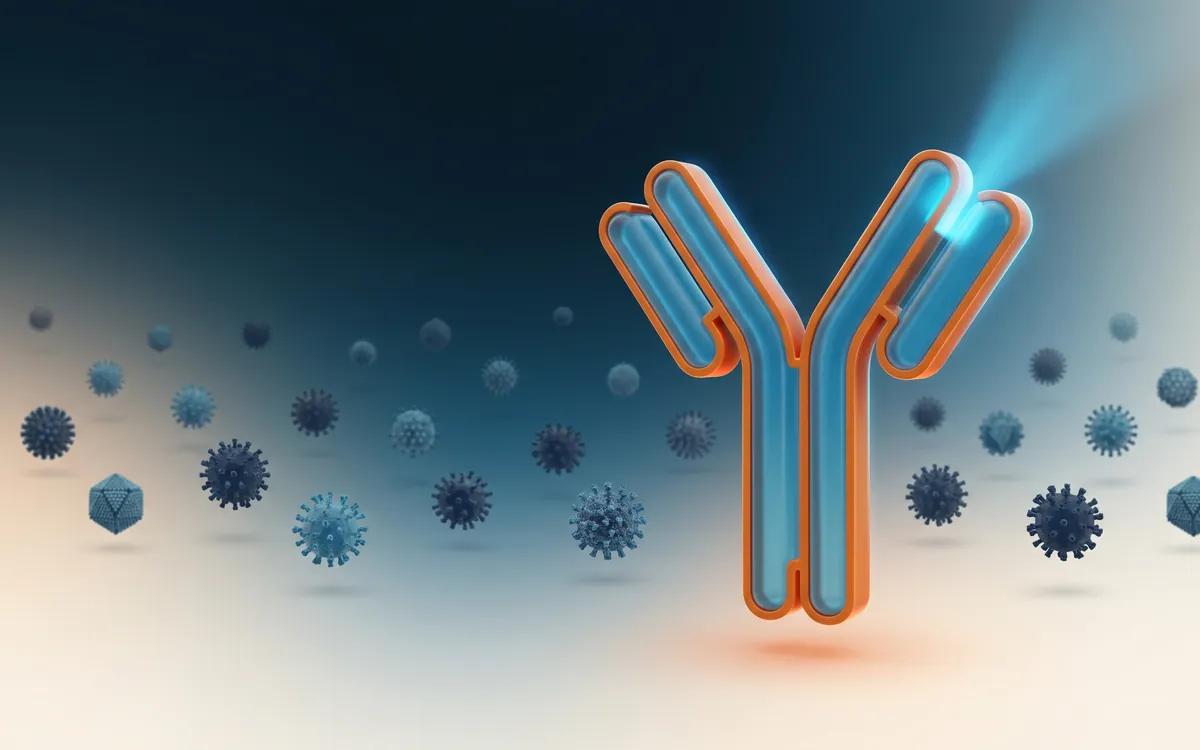
VirSIGHT at a glance: antibody reactome profiling across the known human virome (500+ species).
Read more
The molecular record of every infection, exposure, and immune response the body has generated over a lifetime.
Read more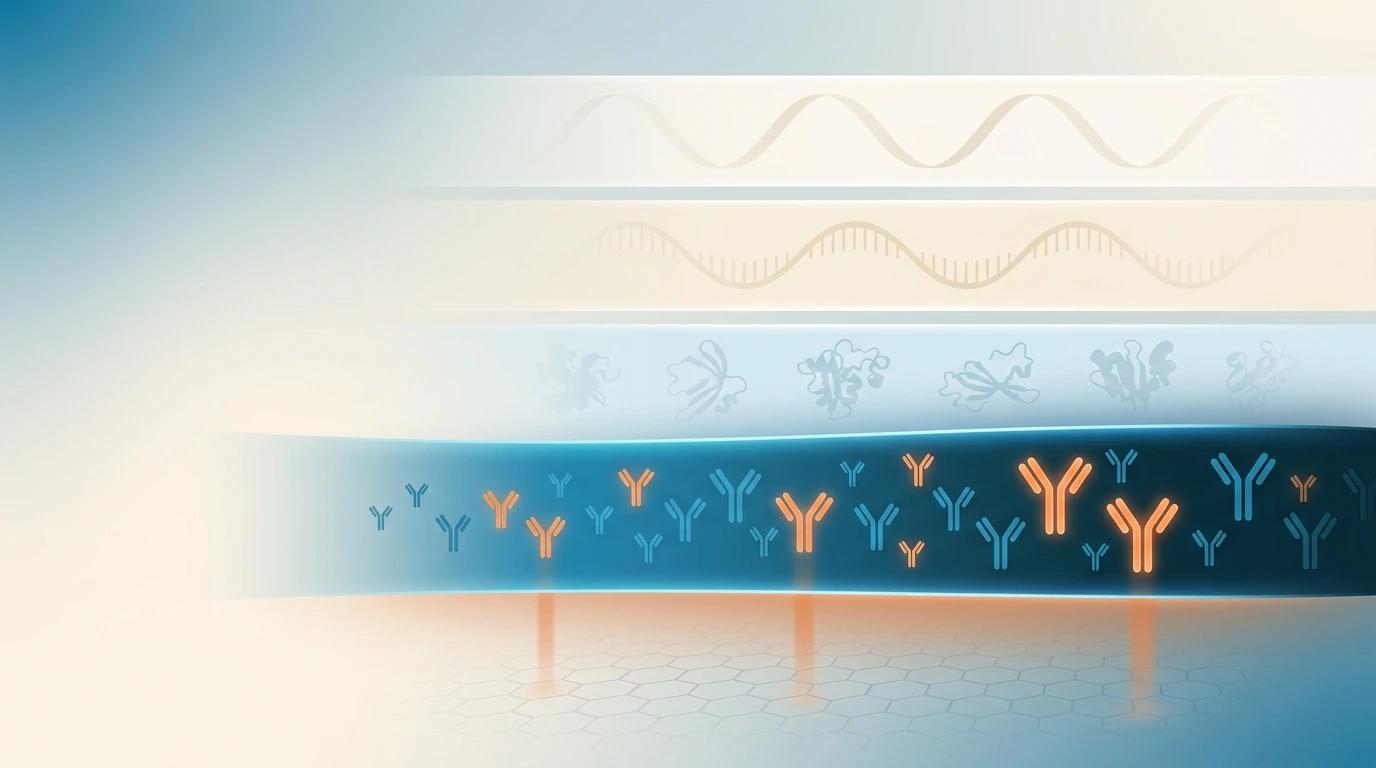
Where the antibody reactome fits in the multi-omic stack, how MIPSA deciphers it, and what the HuSIGHT, VirSIGHT, and En…
Read more
Lindahl et al., 2026: viral immunity in IgG products and global immunity debt.
Read moreAntibody reactome profiling of bat reservoirs identifies emerging zoonotic potential for biosurveillance.
Read moreFrontiers Immunol 2023: pre-infection antibody reactome predicts post-infection HIV viral control.
Read moreAntibody reactome profiling of the human anellome: small DNA viruses persisting in healthy hosts.
Read moreFemales develop broader vaccine-induced antibody repertoires, driven by germinal-center B-cell diversity.
Read moreBjornevik et al., Science 2022: 10M serial serum samples link EBV to multiple sclerosis.
Read moreAntibody epitope selection is partially heritable, shown across twin and SNP-genotyped cohorts.
Read moreBioinformatic deconvolution of cross-reactive signals in virome-wide antibody reactome data.
Read more