In lupus, the autoantibodies you can name are a fraction of the ones at work
A single unbiased screen against the human proteome recovers the established SLE autoantibody suite and, in the same run, surfaces novel candidates with differential reactivity comparable to the targets already known.
A broad autoantibody response, still measured in slices
Systemic lupus erythematosus (SLE) is defined by its antibodies. Serology has anchored the disease since Tan and Kunkel described the lupus-specific Sm nuclear antigen in 1966 (Tan and Kunkel, Journal of Immunology, 1966), and a positive antinuclear antibody remains the obligatory entry criterion for the 2019 EULAR/ACR research classification of SLE (Aringer et al., Annals of the Rheumatic Diseases, 2019). The autoantibody response is the disease's signature.
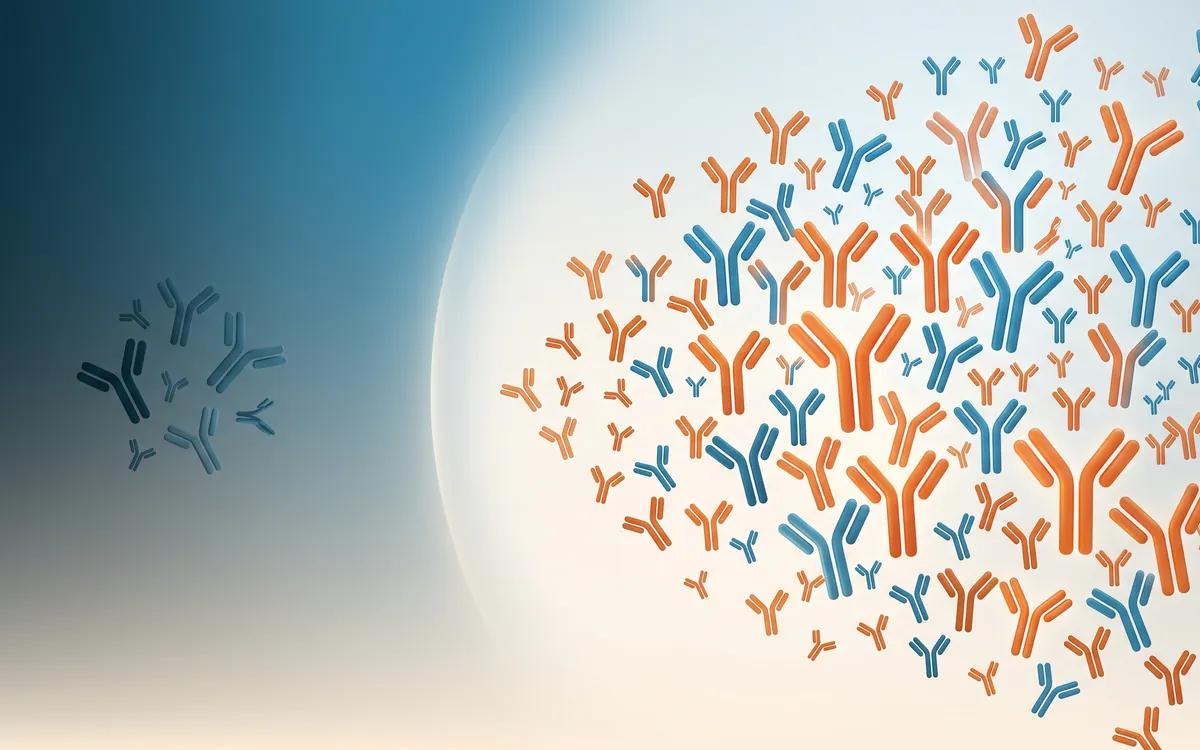
That response is broad and heterogeneous, directed against many different self-targets, but standard clinical and research panels each measure only a small, defined fraction of it. The full breadth of the SLE autoantibody reactome remains incompletely characterized, which leaves an open opportunity: novel autoantigens linked to disease subsets and severity, the kind of candidate biomarkers that could stratify research cohorts and sharpen how subtypes are characterized.
Targeted panels answer a focused question. Discovery needs the whole proteome.
Established SLE serology is precise for the targets it was built around. An anti-Sm or anti-dsDNA assay confirms a defined reactivity with high confidence and answers a focused, validated question. Those panels are the right tool for a known target.
They also measure what you already thought to look for. An autoantigen nobody has named stays outside the panel, and so stays invisible.
Finding those unnamed reactivities means measuring the whole response rather than a chosen slice of it. The antibody reactome is the full complement of antibody-antigen interactions present in an individual's plasma at a given time point, and those reactivities carry detailed information about past and ongoing immune responses. In SLE, the reactivities that matter are the ones the autoantibody repertoire is directed against right now.
Surfacing both the recognized targets and the unnamed ones calls for an unbiased screen on two axes:
- the cohort is run as submitted
- the library is read as built, with no target list specified in advance
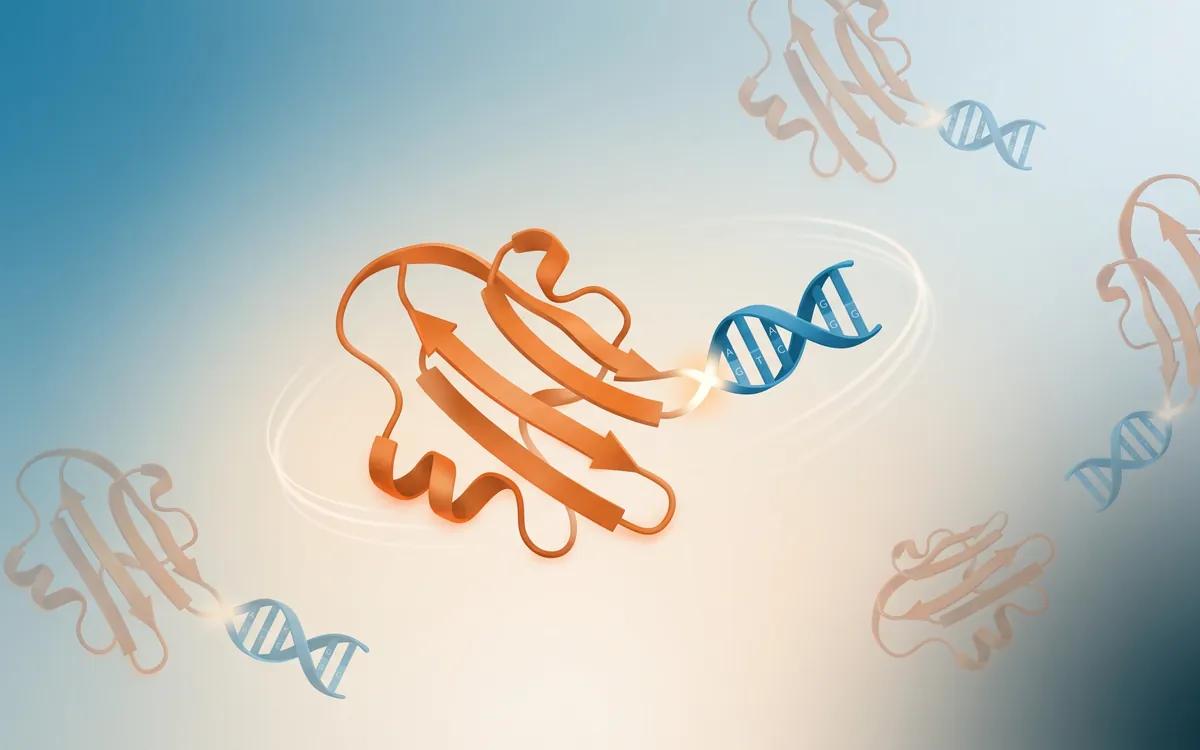
That unbiased screen is complementary to the targeted panels, adding the proteome-wide view they were not designed to provide. Presenting antigens as full-length proteins also exposes the folded, structure-dependent surfaces that short peptides cannot form, so structural reactivities become visible alongside the linear ones the peptide tiles map.
One multiplexed screen across 368,000+ human targets
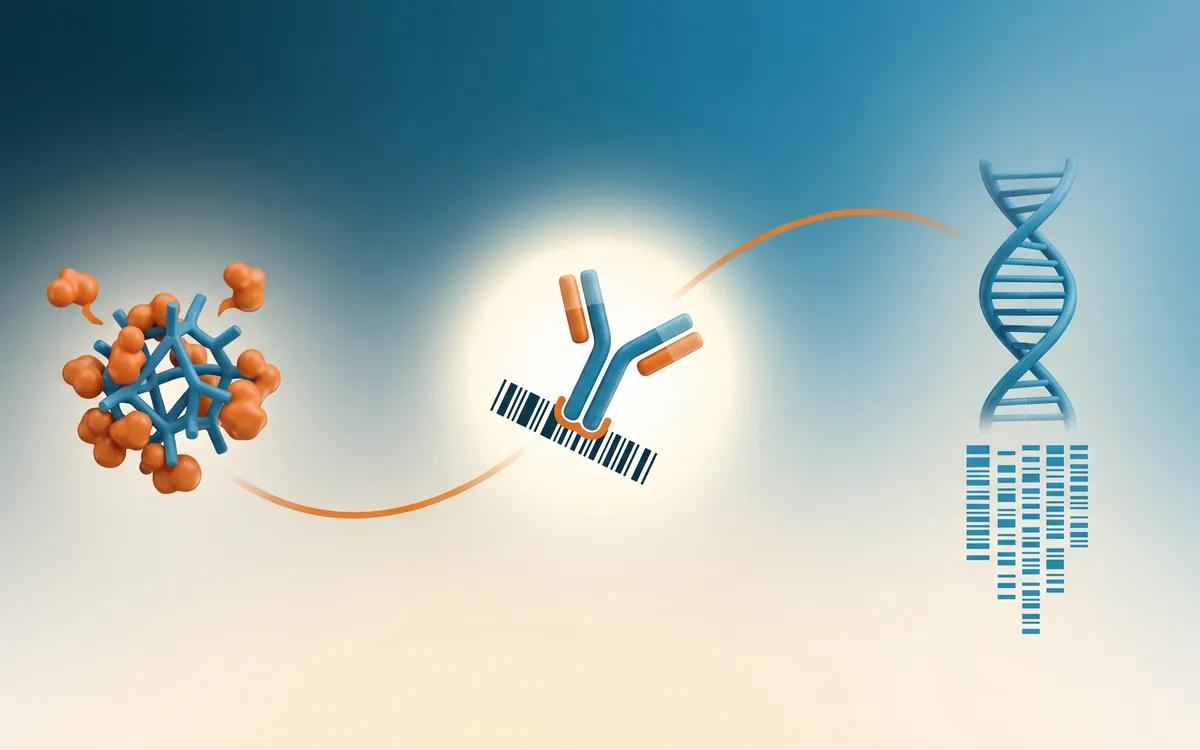
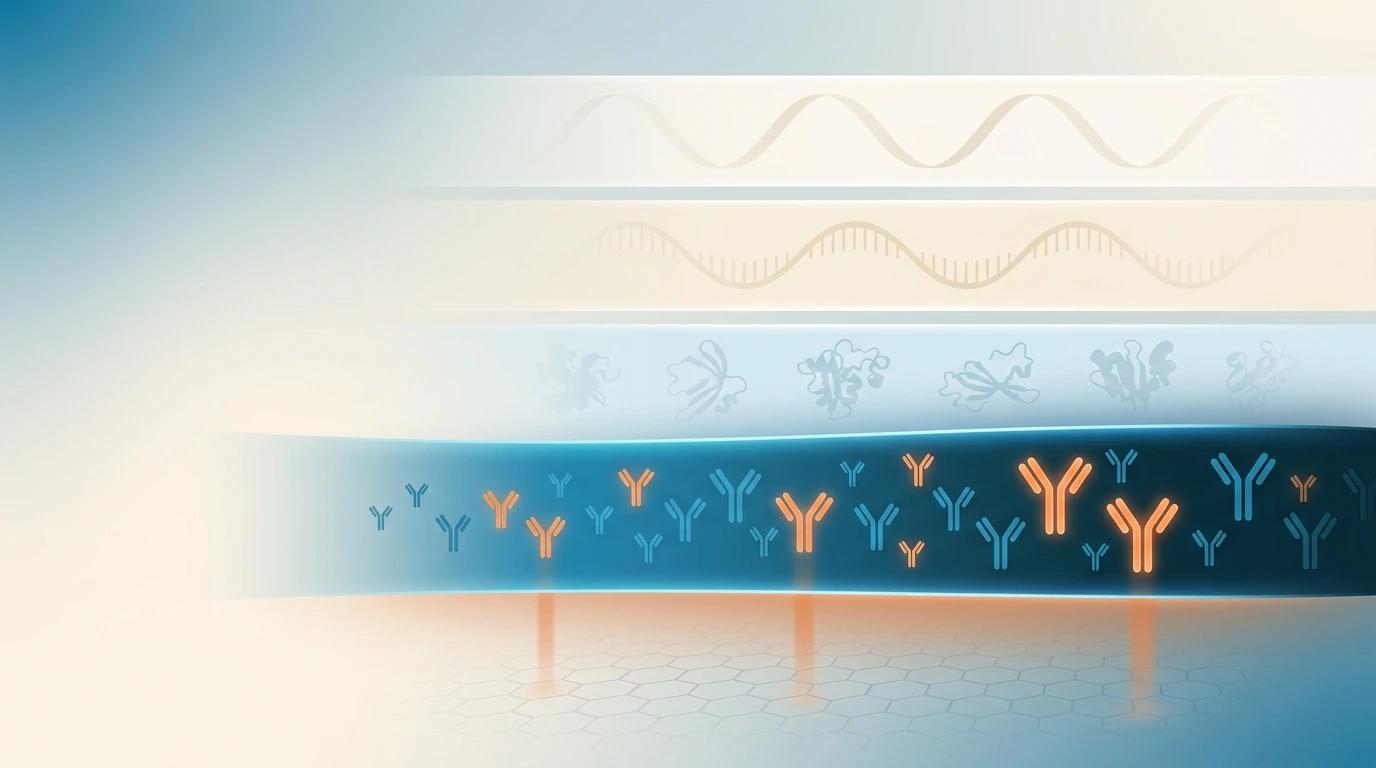
Antibody Reactomics is the field that studies the antibody reactome. MIPSA (Molecular Indexing of Proteins by Self-Assembly) is the technology Infinity Bio uses to decipher it (Larman and colleagues, Nature Biomedical Engineering, 2022). MIPSA converts the antibody-antigen question into a sequencing measurement. Each antigen is built as a DNA-barcoded molecule by cell-free self-assembly, then the library is incubated with a microliter-scale serum sample so the antibodies present capture their barcoded targets. Sequencing the captured barcodes reports which targets a sample bound.
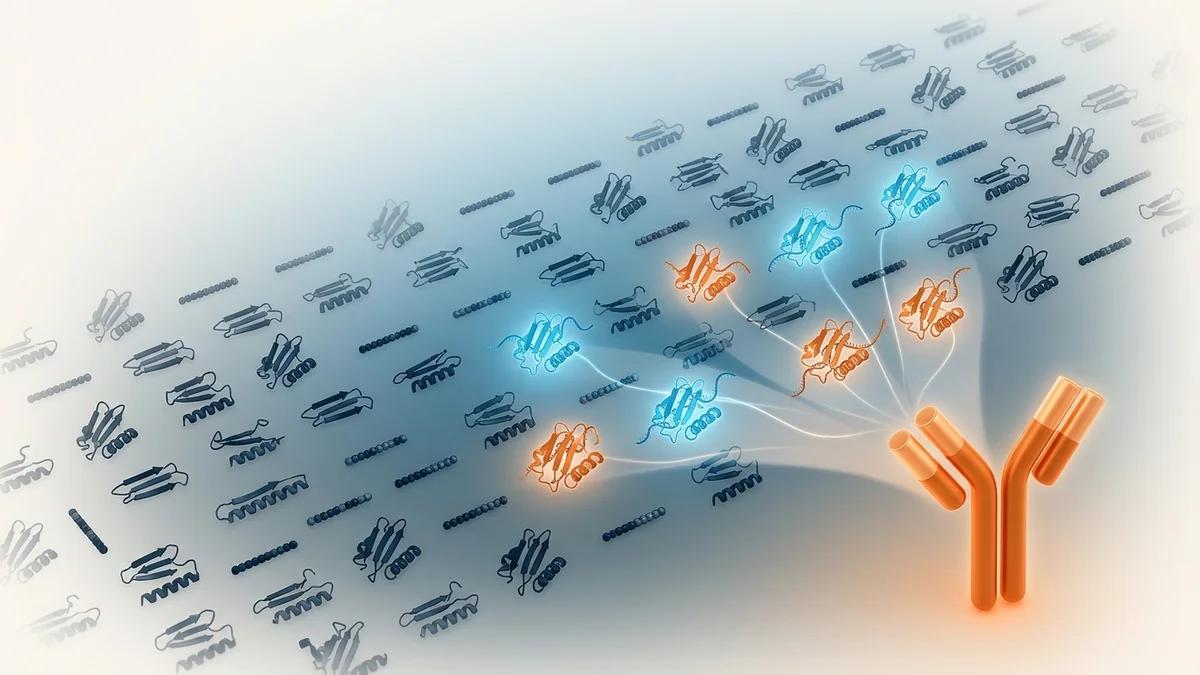
The human library, HuSIGHT, represents the proteome, roughly 20,000 protein-coding genes. It presents them as more than 15,000 full-length proteins alongside more than 353,000 overlapping 90-amino-acid peptide tiles. That is more than 368,000 targets interrogated at once. The full-length proteins reveal structure-dependent reactivities; the peptide tiles map the immunodominant regions inside each target. Unbiased on both axes, in a single screen.
The lupus screen: known targets recovered, novel candidates on the same footing
Infinity Bio screened SLE and control serum through MIPSA against the HuSIGHT library, then compared the SLE reactome profiles to controls to find antigens significantly enriched in the SLE cohort.
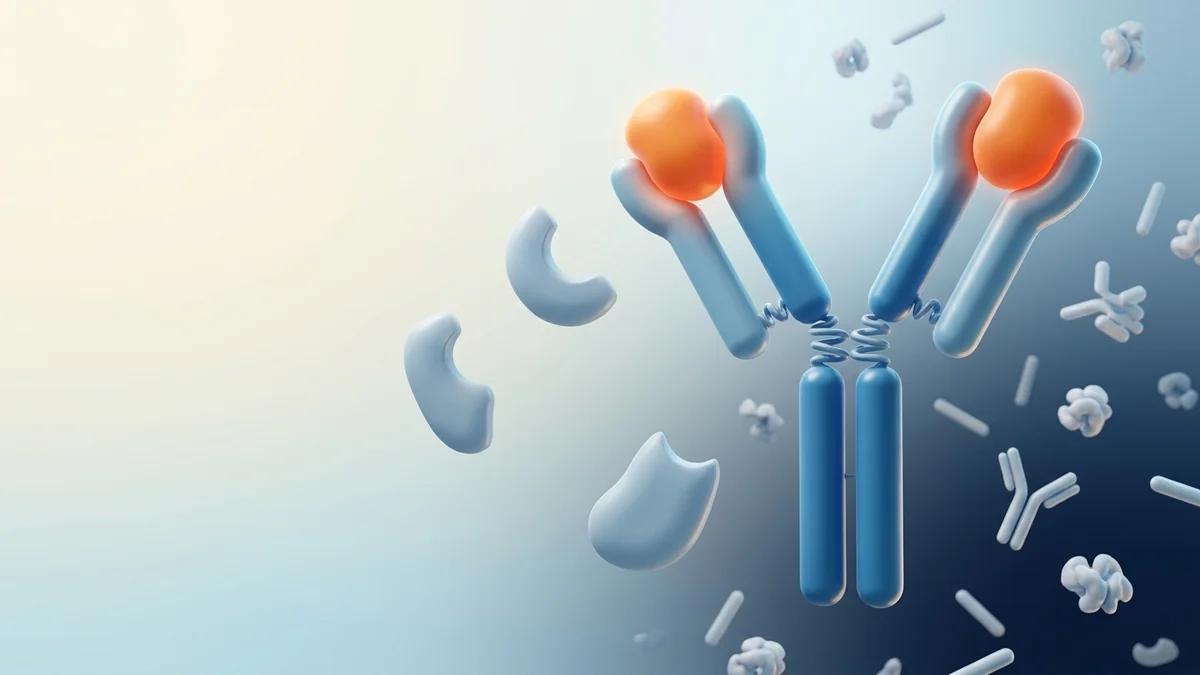
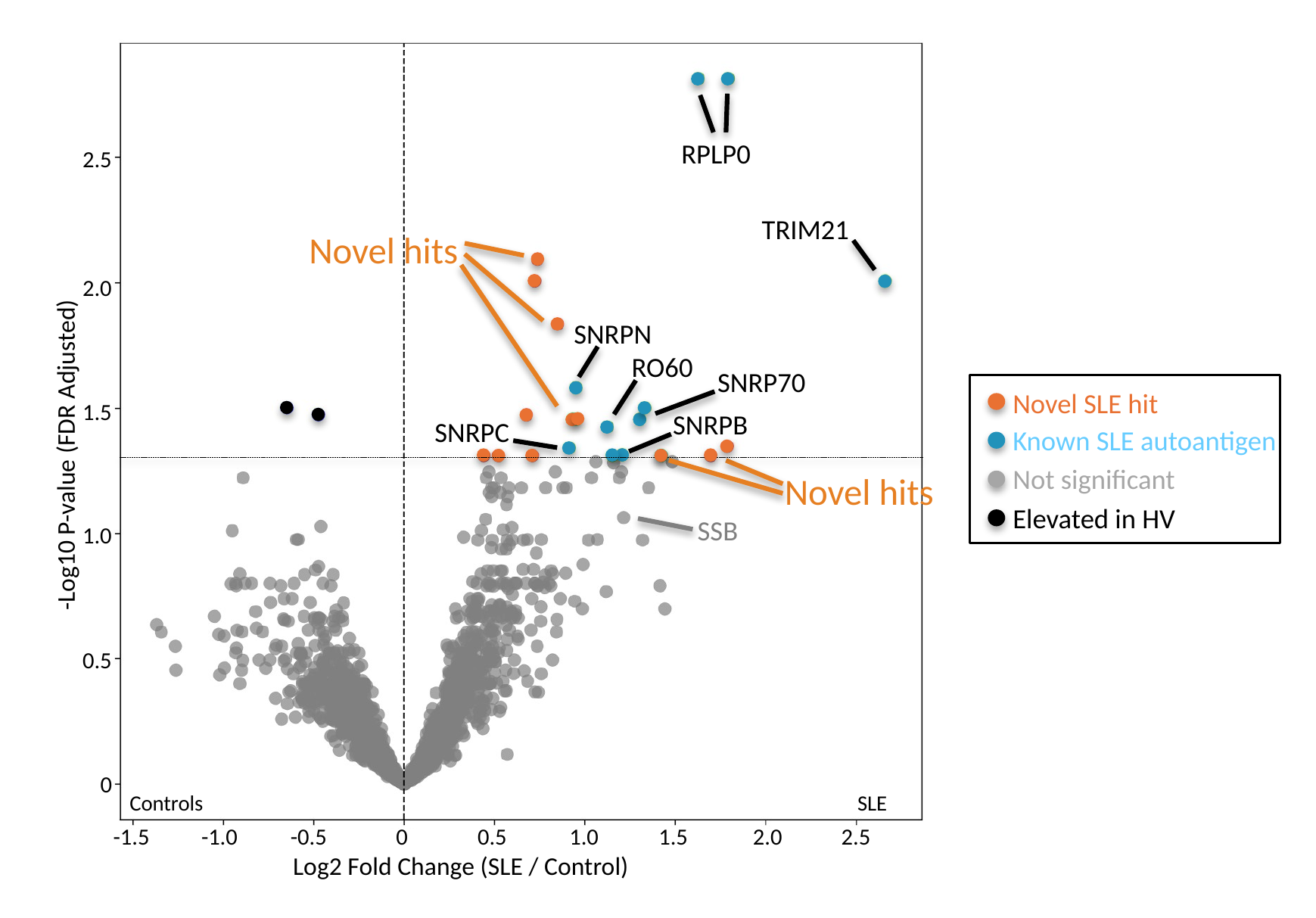
The screen recovered the recognized SLE autoantibody suite: Ro60/SSA, the Sm and U1-RNP ribonucleoproteins, Ro52/TRIM21, and ribosomal P (anti-ribosomal P is an SLE-associated reactivity that Bonfa and colleagues linked to lupus psychosis specifically, New England Journal of Medicine, 1987). The recovered targets are the screen's own positive controls: an unbiased screen that independently rediscovers what decades of SLE serology already documented is a screen that is working.
In the same run, multiple significant novel hits, enriched in the SLE cohort, showed differential reactivity comparable to the known targets. New candidates, on the same statistical footing as the known targets, surfaced in one experiment rather than one hypothesis at a time.
How do you trust a novel autoantibody target from an unbiased screen?
The unbiased screen carries its own controls. Because it recovers the established SLE autoantibody suite in the same run, those recognized targets act as positive controls that confirm the assay is working. A novel hit then earns attention by clearing the same FDR-adjusted significance threshold and showing differential reactivity comparable to the known targets. MIPSA also reproduces: inter-replicate Pearson correlation is typically above 0.95, so the same sample returns the same reactivities from run to run. Recovery of the known suite is what makes an unnamed candidate credible.
Go beyond the known targets on your next cohort
The autoantibodies you can already name are a fraction of the response. The rest of the SLE reactome is present in the same sample, waiting to be deciphered. One unbiased screen recovers the established suite and surfaces novel candidates for biomarker discovery and research stratification, on a single cohort.
If a lupus cohort (or any immune-mediated disease cohort) is sitting in your freezer with its autoantibody response uncharacterized, add Antibody Reactomics to your next discovery campaign and see what surfaces beyond the known targets. Your next discovery awaits.
Get in touch →